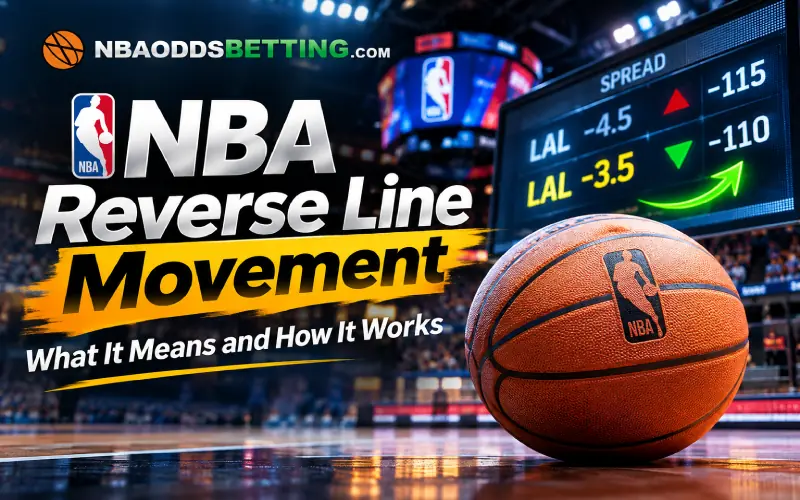
Imagine 75% of the recorded NBA spread bets are backing the Lakers, but the sportsbook moves the spread toward their opponent. NBA reverse line movement happens when a line moves against the side receiving most of the tickets. Larger wagers on the less popular team are one possible explanation. The move itself tells you what changed in the price, not who placed a bet or why the sportsbook changed it.
What NBA Reverse Line Movement Means
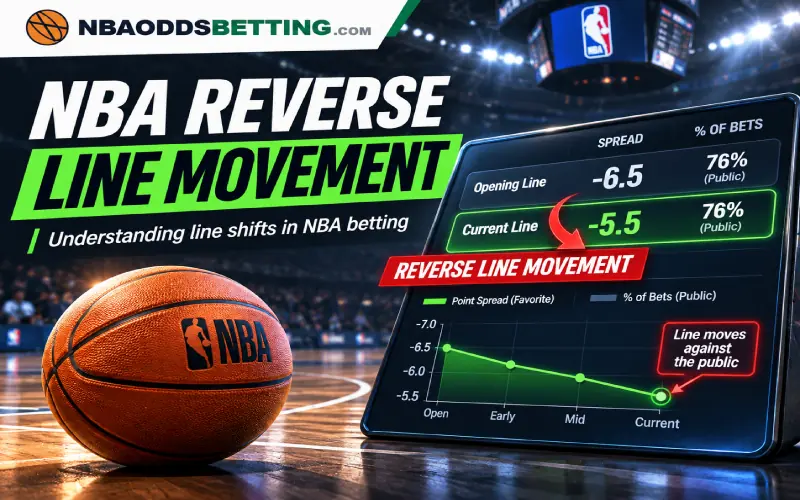
NBA reverse line movement is a change in the point spread or odds toward the side receiving fewer bets. Compare the same market at the same sportsbook, and make sure the ticket percentages refer to that market.
Here’s a simple example:
- The Lakers open at −5.5 against the Celtics. Boston is +5.5.
- Around 75% of the spread tickets back the Lakers.
- Despite that support, the spread moves to Lakers −4.5 and Celtics +4.5.
The line has moved toward Boston. Someone backing the Celtics now receives one fewer point. If Boston loses by five, a bet at +5.5 covers, while a bet at +4.5 loses. That is why the price you can actually take matters, even if you spotted the direction correctly.
For Philippine bettors, timing matters. Many NBA games start in the morning in Philippine time. Compare the opening or first recorded line with an updated line before tip-off, and check the time zone on each snapshot.
How NBA Reverse Line Movement Works
Sportsbooks adjust their odds in response to betting activity, risk exposure, market information and competing prices. The amount wagered can matter more than the number of individual bets. Two terms are essential:
- Tickets: The percentage of recorded individual wagers placed on each side.
- Handle: The percentage of the total money wagered on each side.
For example, 70% of tickets might back the Warriors, while 65% of the handle supports the underdog. In that sample, the underdog has the larger average wager. That difference in NBA betting percentages doesn’t establish reverse line movement on its own: you also need to see the line change.
That’s where NBA sharp money becomes relevant. Experienced bettors may influence a sportsbook’s price, but a public split doesn’t identify their accounts. Look at the ticket share, handle share and actual spread movement together.
Compare multiple sportsbooks, too. If several books move shortly after the same lineup announcement, that news is another plausible explanation. A price change at one shop can instead reflect that shop’s own exposure.
Sample NBA Reverse Line Movement
Consider the Memphis Grizzlies at New Orleans Pelicans on November 13, 2026. Both snapshots below describe the New Orleans spread moving from +4.5 to +3.5. The percentages are for the Pelicans’ side of the spread market. One snapshot has a recorded time; the time of the other is unknown.
| Snapshot | First spread seen | Spread at snapshot | Pelicans tickets | Pelicans handle | RLM signal |
|---|---|---|---|---|---|
| Untimed notes for this preview | NO +4.5 | NO +3.5 | 36% | 36% | Developing RLM (as reported) |
| Tracker, 8:15 a.m. ET / 9:15 p.m. PHT | NO +4.5 | NO +3.5 | 23% | 4% | Confirmed RLM (tracker label) |
Sources: ProComputerGambler’s NBA Reverse Line Movement Tracker and its underlying DraftKings splits board, November 13, 2026. “First seen” means the first price the tracker captured, which may differ from the sportsbook’s official opener. The untimed 36%/36% figures could not be independently matched to a timestamp. These snapshots are historical, not live prices.
What does the example tell us? In the untimed notes, Memphis had about 64% of the tickets and the Pelicans had an equal share of tickets and handle, a gap of zero percentage points. In the timestamped snapshot, Memphis had 77% of the tickets, while the Pelicans had 23% of tickets and only 4% of the handle. In both cases the spread moved toward the side with fewer bets. Neither snapshot establishes that professionals bet on New Orleans.
Fade the Public NBA: Does It Work?
To fade the public in NBA betting means backing the side attracting fewer tickets. Reverse line movement can highlight a price worth examining, but automatically opposing the crowd is not a guaranteed winning strategy. Several factors can explain an unusual move:
- Injury news: A star player’s availability can quickly change the spread.
- Late lineup changes: Rest decisions and starting lineup announcements change expectations before tip-off.
- Small samples: Early percentages may reflect a handful of bets at one sportsbook.
- Juice or vig: A book can change the price attached to a spread without changing the points. For example, −4.5 at −110 and −4.5 at −120 are different prices on the same handicap.
Also watch closing line value (CLV): compare the number and price you secured with the closing market for the same bet. Consistently getting a better price can indicate sound timing, but it doesn’t guarantee a profit. A steam move—a rapid change across several sportsbooks—can provide context, especially if you can identify when news broke.
How to Use Reverse Line Movement Responsibly
- Check percentages. Identify the market, sportsbook and timestamp. Compare ticket share with handle share.
- Confirm line direction. Write down both spreads from the same team’s perspective. Verify that the price actually moved toward the side with fewer tickets.
- Check injury reports. Review injuries and lineup updates before attributing the move to betting activity.
Set a fixed budget before viewing the odds. A ₱500 stake should fit comfortably within money already set aside for entertainment. If it doesn’t, skip the bet. This article is for eligible adults aged 21 and above.
Frequently Asked Questions
What is reverse line movement in NBA betting?
It’s when the spread or odds move toward the side receiving fewer tickets, opposite to the majority of recorded wagers in that market.
Is reverse line movement the same as sharp money?
No. Reverse line movement describes an observable change in price. Sharp money refers to wagers from informed or professional bettors. Such wagers might explain a move, but the line alone doesn’t identify who placed them.
Does reverse line movement guarantee a winning bet?
No. Injuries, lineup changes, market adjustments and the price you accept can all affect the outcome of the bet.
Where can I check NBA betting percentages?
VSiN’s NBA betting splits show ticket and handle shares for participating books. Check the selected sportsbook, market and update time before comparing percentages.
Conclusion
NBA reverse line movement tells you when prices and ticket counts point in different directions. It cannot tell you who moved the market or who will win. Combine betting splits, injury news and NBA odds comparisons before drawing conclusions.
Responsible gambling: Sports betting involves financial risk, and no betting signal guarantees a result. This information is for eligible adults aged 21+. Never chase losses or wager money you cannot afford to lose. For guidance and support in the Philippines, visit PAGCOR’s official responsible gaming resources.